When we started working on websites for social services a few years ago, our main goal was to make work easier for individual homes and help them improve their presentation and clarity of information. After several different versions of the website, we dare say that our solution is one of the best in the Czech Republic for social service facilities. We had to prepare everything according to strict accessibility criteria so that everyone could view the website regardless of their limitations.
Today we will show you the website of the Alfred Skene Home in Pavlovice u Přerova. The director of this home knew exactly what she wanted, which made our collaboration more interesting and the result more valuable.
We approach websites for social services a little differently than our other projects.
Marketing is not as important for them, but they should be mainly clear, with easily searchable information, simple navigation, and a clear distinction between individual services. At the same time, we apply the same rules to them as to our other websites—the entire website must comply with clearly defined accessibility rules, be fully responsive, and comply with other rules of good web design practice.
Home page – clarity above all
In practice, we often encounter home pages cluttered with all kinds of information, both relevant and irrelevant. Clients feel that putting everything on the first page of the website will make it clearer. Nothing could be further from the truth!
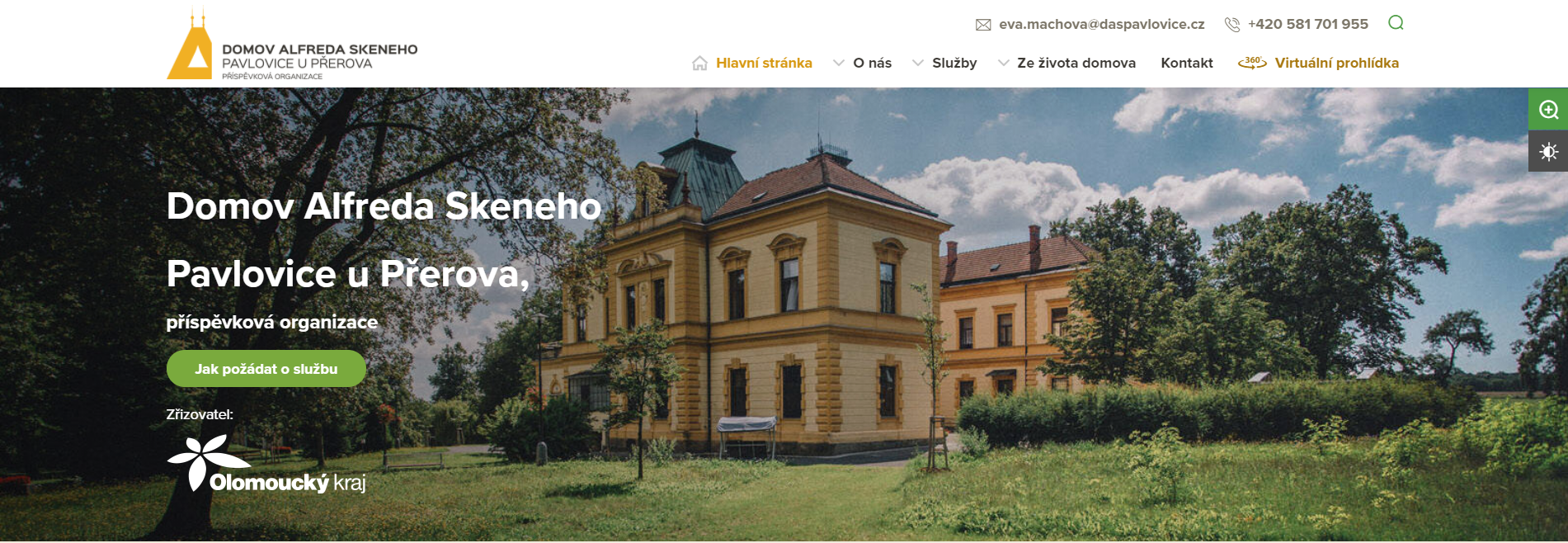
The main page of a website should be clear and easy to navigate. It should guide visitors to other parts of the site so that they can find exactly what they are looking for. On our websites, you will most often find a large photo of the building, the founder, clear contact information in the top right corner, and our interactive virtual tour.
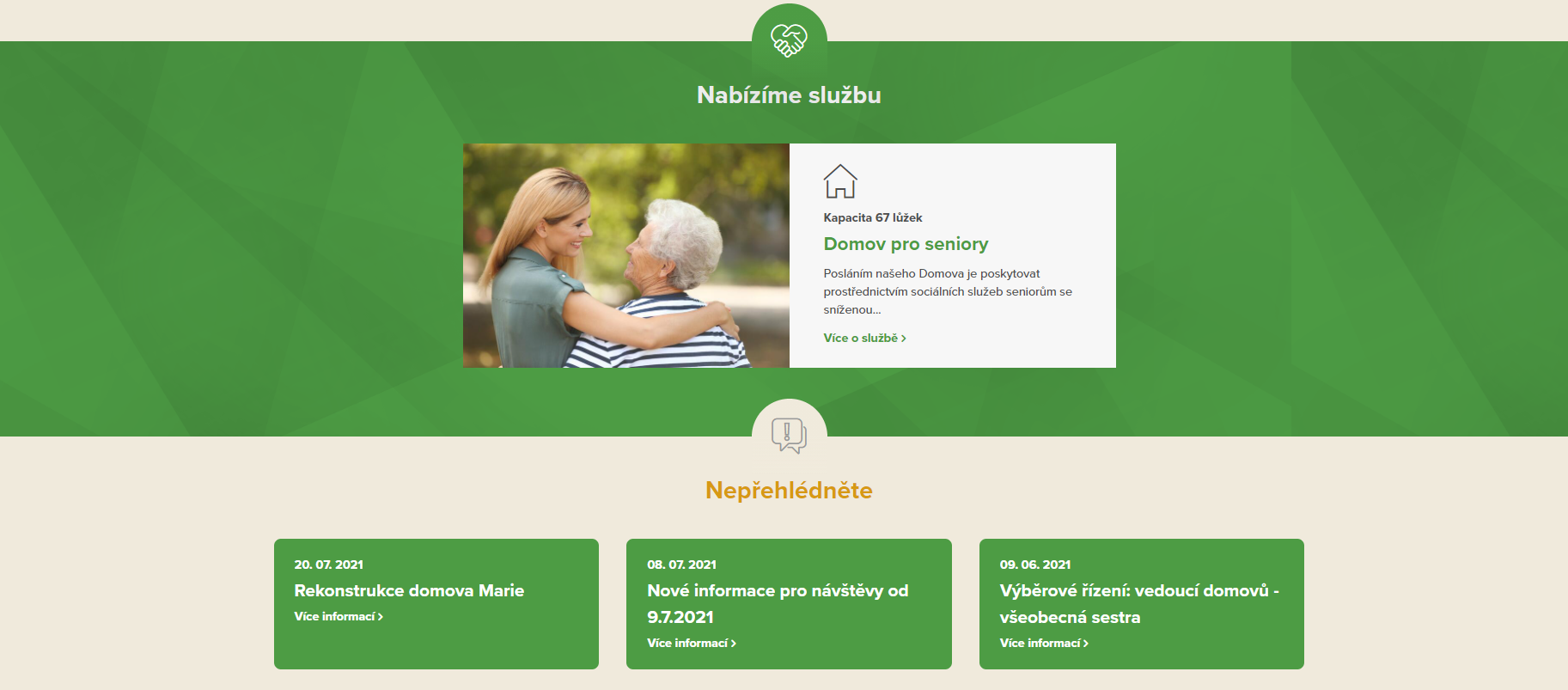
A little further down, visitors will find what services the home offers and an overview of the most important announcements. Our research shows that the pages for services, important announcements, and documents tend to be the most visited. That is why we give them priority and place links to them at the top of the main page.
How to present the facility to the public? With an interactive virtual tour!
Our work is not limited to web design. We also create excellent virtual tours that beautifully complement our websites. They allow us to present the entire facility in the best possible way and devote the rest of our energy mainly to the clarity and functionality of the entire website.
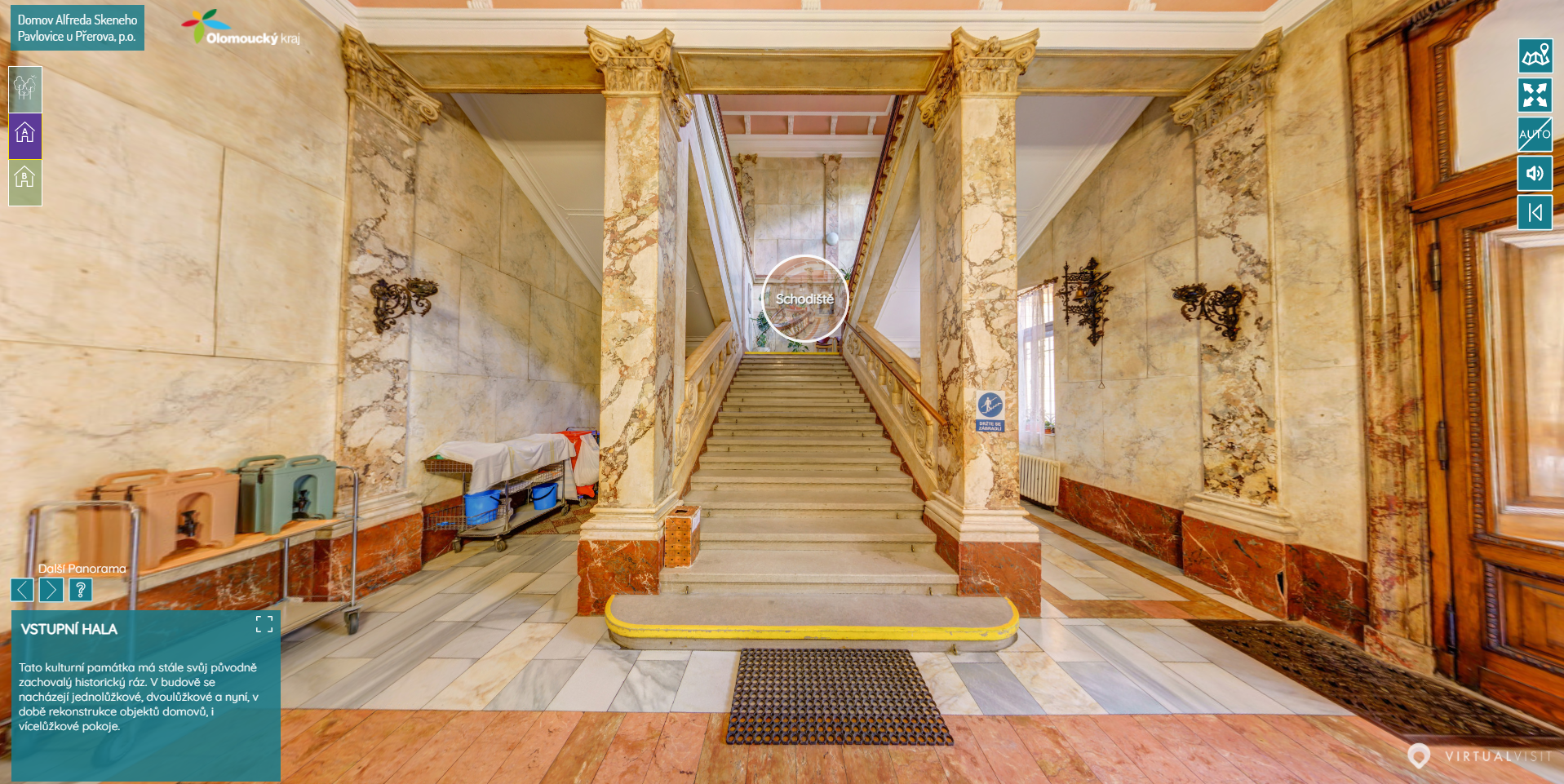
Our virtual tours are not just a jumble of uninteresting empty corridors. They include spoken commentary, descriptions, speech bubbles, and, in addition to normal panoramic photos, aerial views from a drone.
Homes with history
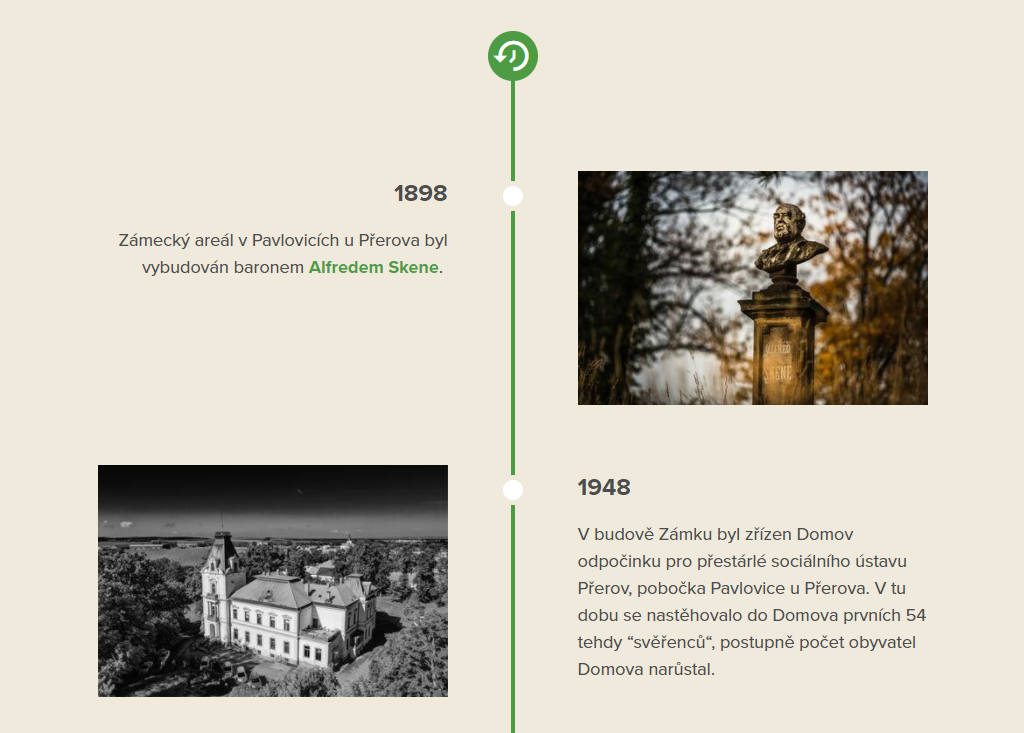
Some homes have a rich history. They are often located in old castles or other buildings that are several centuries old. For such cases, we have prepared a timeline on which any significant year can be easily highlighted.
Documents - clear and concise
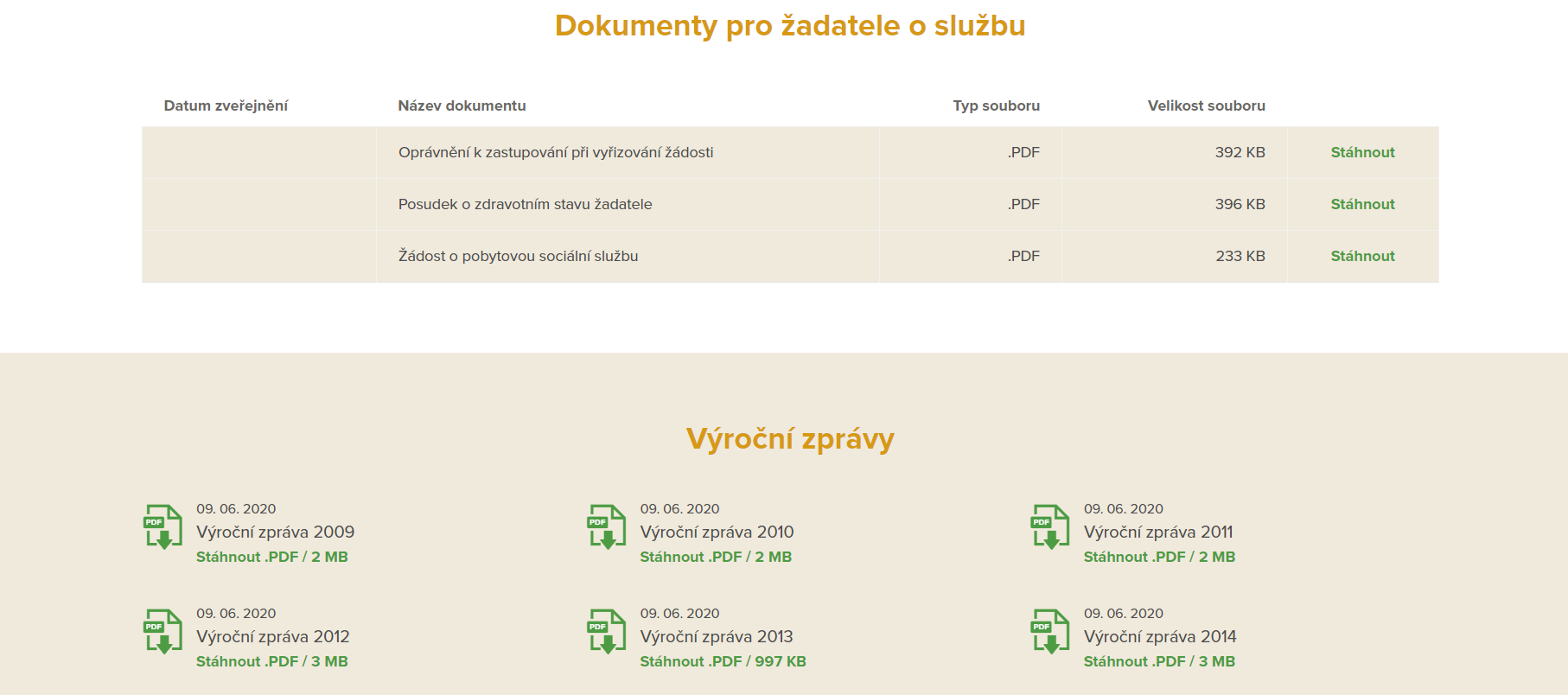
Based on our research, the documents page is one of the busiest. This is logical - interested parties look here for admission applications, annual reports, visiting rules, and many other important documents. Such a page should therefore be clear, with documents clearly arranged and ready for download.
Services offered
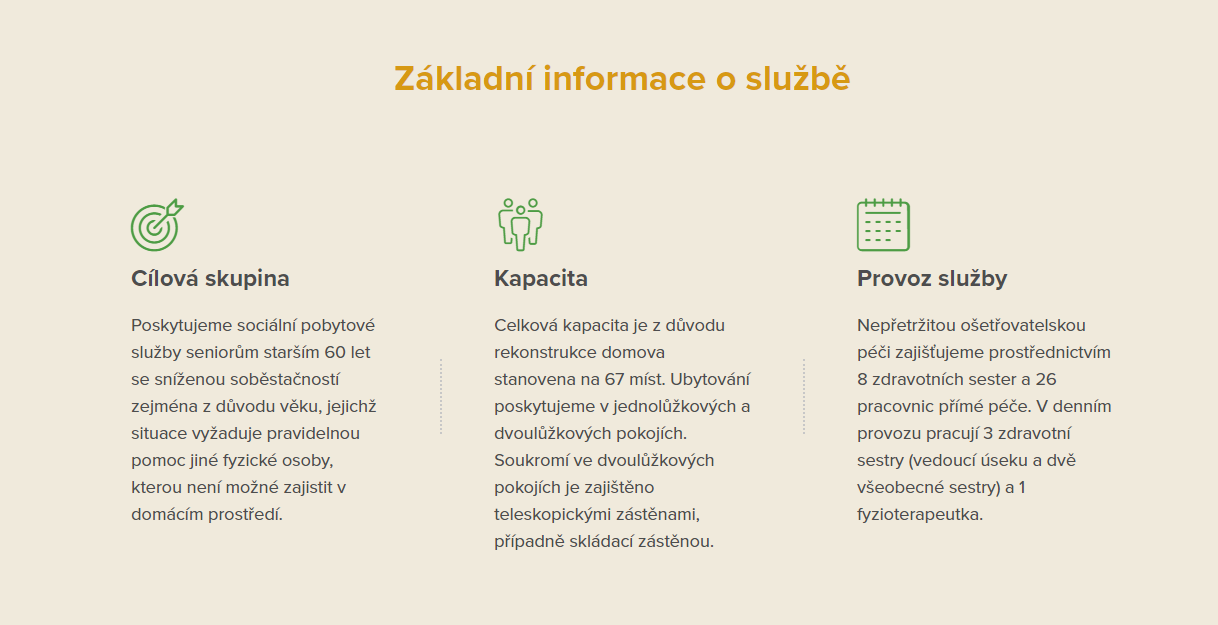
Service pages can be dense with information, but that makes it all the more important for all pieces of information to be presented clearly and unambiguously. To this end, we use icons that clearly separate certain groups of information. Whether it's the capacity of a service, its target group, or how it works, you'll always find it at first glance on our websites.
Contacts
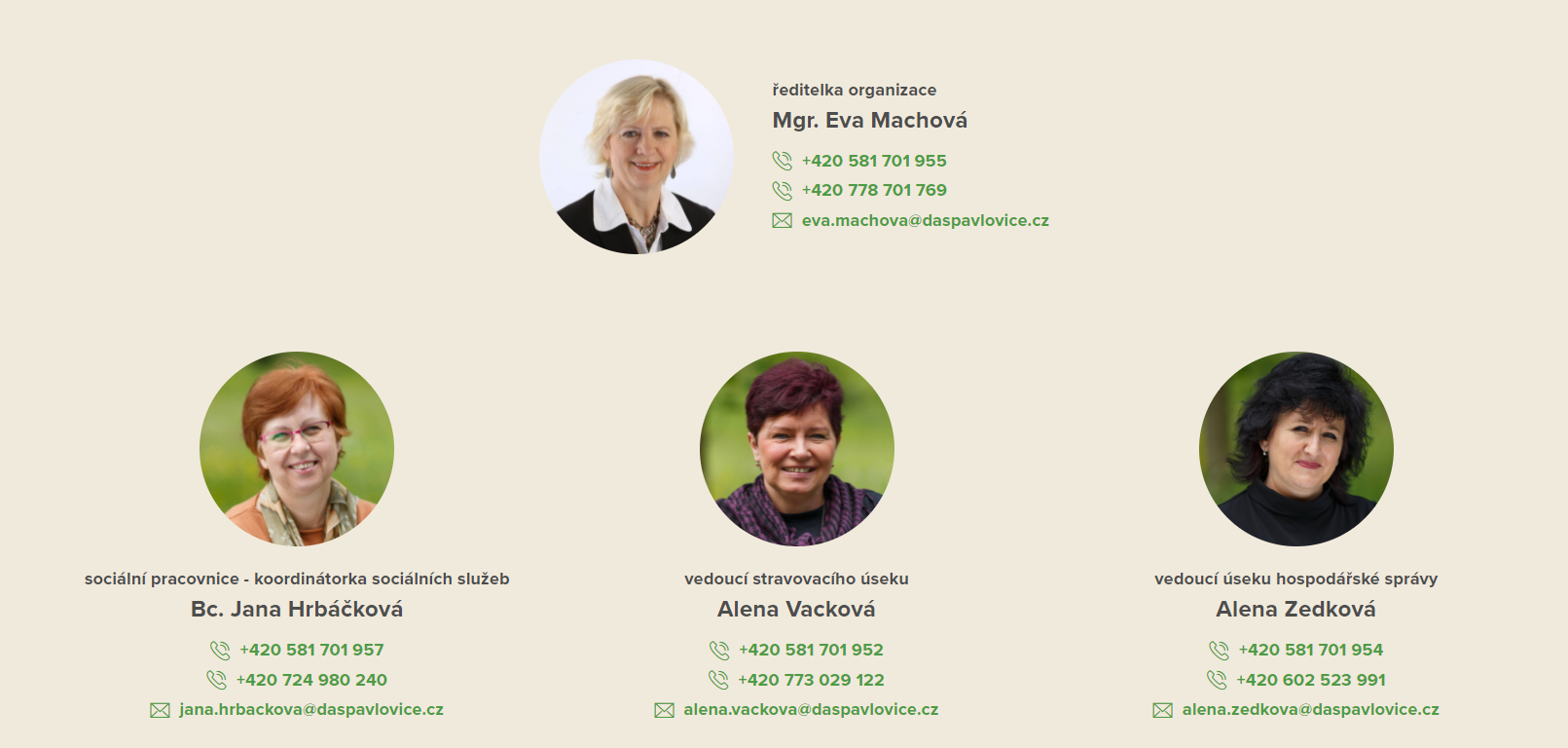
For new clients, moving into a home can be a stressful experience. That's why they really appreciate being able to associate the names of employees with friendly faces. At Virtual Visit, we take portraits specifically for the contact page. You have to admit that the faces of real people look better than computer avatars or simple tables.
Website connectivity
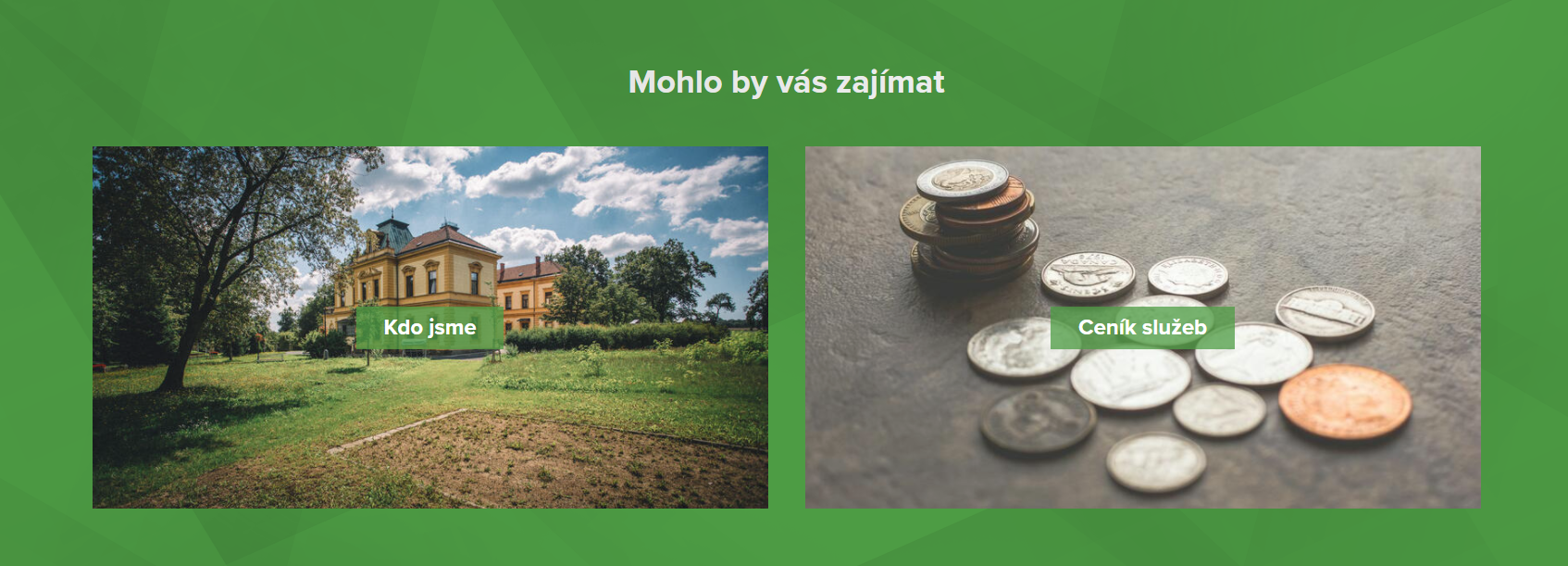
Today, it is a matter of course that individual pages are interconnected. Visitors are thus guided smoothly through the entire website. Thanks to this, they do not encounter the same information repeatedly and receive exactly the information they are interested in. For example, if someone is viewing a page about a service, they will probably be interested in how much the service costs and what other activities are available at the home.
Modern websites – fewer worries
This is our vision for the websites of social service homes. Simple, clear, modern. With a comprehensive but uncomplicated content management system that anyone can understand in no time.
A website that works for you, where visitors can find all the information they need, allowing homes to devote more time to caring for their clients.
This saves our clients time, stress, and money associated with maintenance, as clients can handle most tasks themselves.
Check out our dedicated project for social service facilities, Domovy Online!